3 Types of Harm Snoring Causes to Bed Partners: Noise Pollution, Cardiovascular Issues, and Intimate Relationships
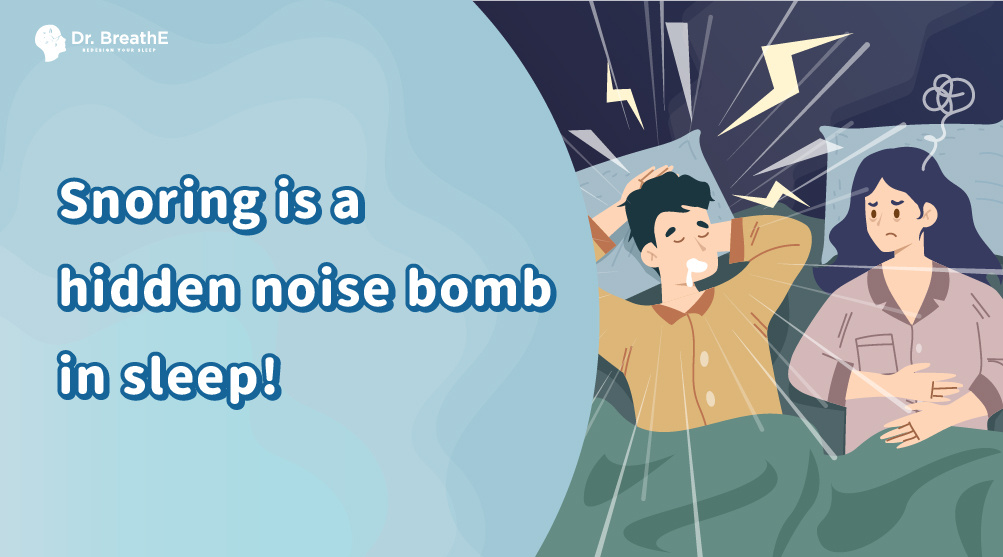
Mr. and Mrs. Huang have been married for two years but have been constantly arguing about the exact same thing: Mr. Huang's snoring. His snoring has been getting louder, bombarding like thunder every night. At first, Mrs. Huang just tossed and turned, trying to adjust her sleeping posture to adapt to the noise, but she soon found herself unable to fall asleep. She could barely get a few hours of sleep a night. As a result, Mrs. Huang began feeling groggy during the day, her work performance declined, and she became more irritable over trivial matters.
However, the problem didn't stop at sleep deprivation; Mrs. Huang's health also began to suffer. Long-term sleep deprivation caused her to have headaches, lose concentration, and even exhibit mild symptoms of anxiety. She realized that continuing like this would affect her physical and mental health and started worrying that keeping company with snoring long-term would cause even greater harm to her life.
- The threat of snoring to you and your partner is far beyond your imagination!
- Snoring is a form of noise pollution
- Long-term snoring increases cardiovascular disease risk
- Snoring affects couples' intimate relationships
- Best advice for preventing and treating snoring 5.1 Sleeping on your side 5.2 Weight loss 5.3 Oral myofunctional therapy 5.4 Anti-snoring oral appliance 5.5 Continuous positive airway pressure (CPAP)
- Conclusion
The Threat of Snoring to You and Your Partner is Far Beyond Your Imagination!
Snoring is not just "noise" during sleep; it is actually a crucial warning sign of Obstructive Sleep Apnea (OSA). Research has found that when snoring exceeds 53 decibels, most people will concurrently experience sleep apnea. This indicates that the upper airway has collapsed and become obstructed during sleep, leading to a pause or reduction in breathing, which causes blood oxygen levels to drop. Frequent apneas lead to multiple "microarousals," severely impacting sleep quality and increasing stress on the cardiovascular system.
The frequency of snoring is also a key indicator. If someone snores for more than a quarter of their respiratory cycles during sleep, they are very likely suffering from sleep apnea. This means their airway is repeatedly obstructing throughout the night, increasing the risk of apneas. However, what you might not know is that snoring not only impacts the health of the snorer but also causes significant distress to the bed partner sleeping next to them. Studies show that over half of snorers produce noise exceeding 45 decibels, which already meets the standard for disturbing sleep. Even more concerning, 14% of people snore louder than 53 decibels, a level associated with an increased risk of cardiovascular disease. Long-term exposure to this noise means the partner not only faces decreased sleep quality but may also suffer further health hazards due to increased nighttime cardiac stress and elevated blood pressure. Noise interference causes the partner's sleep to become fragmented, leading to daytime lethargy and lack of focus. Over time, this not only impacts the partner's physical health but also increases psychological stress, even affecting the marital relationship.
Snoring is a Form of Noise Pollution - Silent Enduring is Mental Torture
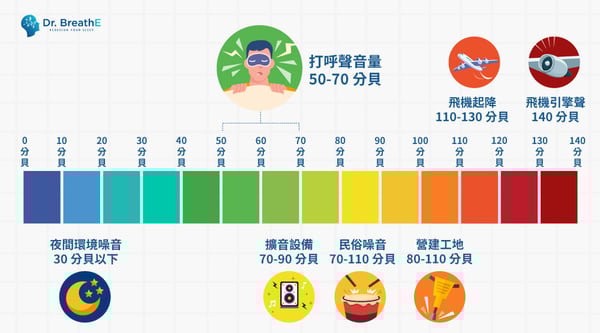
Snoring is actually not just a personal sleep issue; it can be considered a form of noise pollution. According to World Health Organization (WHO) recommendations, nighttime environmental noise should be kept below 30 decibels to avoid interfering with sleep. However, the volume of snoring can typically reach 50 to 70 decibels, sometimes even exceeding 80 decibels, which is equivalent to the volume of a vacuum cleaner or an alarm clock. According to the latest survey by the Taiwan Society of Sleep Medicine, 60% of respondents reported having their sleep interrupted by noise, with the bed partner's snoring being the primary source. Yet, 40% of the public choose to silently endure this snoring noise, unaware that this long-term sleep disruption could increase the risk of health problems such as diabetes and myocardial infarction.
When snoring reaches this volume and frequency, it severely affects the sleep quality of the partner or family members, potentially leading to chronic insomnia or sleep deprivation. The impact of noise pollution on the body cannot be ignored. Long-term exposure keeps a person in a constant state of stress, increasing the risk of cardiovascular disease, anxiety, and mental fatigue. Therefore, snoring is not merely an annoying nighttime noise; it can become a health-hazardous form of noise pollution, seriously impacting the family's quality of life and relationships.
Long-Term Snoring Increases Each Other's Cardiovascular Disease Risk
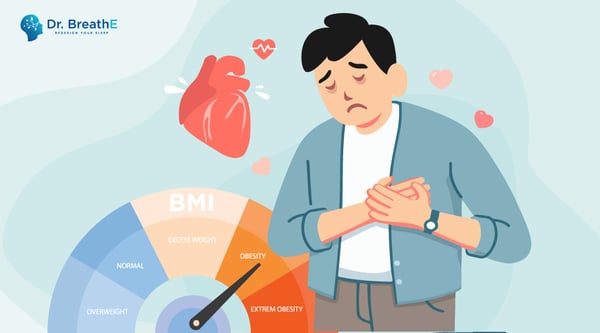
Being chronically disturbed by a partner's snoring can constitute a form of nighttime noise pollution. When we sleep, our bodies are not just resting; they are also carrying out many important tasks, such as protein synthesis, memory consolidation, and hormone secretion. These processes are crucial for restoring energy and ensuring healthy functioning during the day. However, if noise interrupts these processes, our bodies endure a great deal of stress. Over time, health can be severely compromised. Noise can trigger an overactive autonomic nervous system, leading to a series of physiological responses, including a faster heart rate and elevated blood pressure. These physiological reactions generally occur because prolonged exposure to such a stress state causes endothelial cell dysfunction. The process that damages endothelial cells greatly increases the risk of hypertension, myocardial infarction, and stroke.
When environmental noise enters the sleep process, regardless of its intensity, it triggers some automatic bodily reactions. These reactions are mainly regulated by the brainstem's "ascending reticular activating system" (ARAS). This system receives messages from multiple senses (including the auditory system) and transmits them to the central nervous system. The noise signal is sent to the thalamus, which acts as a "gatekeeper," deciding whether to pass these messages to the cerebral cortex. When the noise signal reaches the cerebral cortex, it may cause cortical arousal, interrupting the sleep progression. For example, if you are constantly interrupted by outside noise while sleeping, even if you are not fully awake, your deep sleep decreases, and you feel exhausted upon waking up.
Snoring Affects Couples' Intimate Relationships
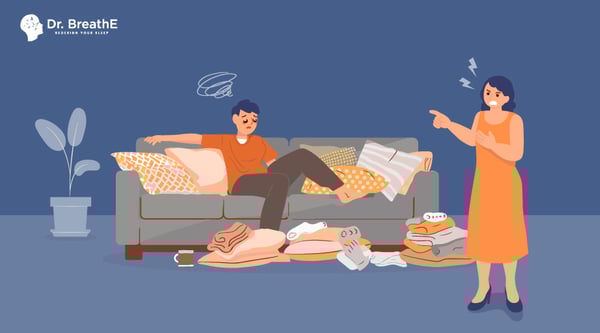
Snoring can take a toll on the intimate relationships of married couples or partners. The sound of snoring not only interferes with sleep quality but also subjects the spouse to sleep deprivation, which negatively impacts the relationship. These emotional effects can exacerbate conflict, increase stress, and lead to alienation between partners.
- Sleep Deprivation Affects Emotional Stability: Spouses awakened by their partner's snoring, lacking good sleep quality over the long term, are prone to emotional instability, leading to a decrease in mutual patience and understanding.
- Impacts Sex Life: Research indicates that sleep apnea patients frequently wake up due to apneas, resulting in lighter sleep and decreased testosterone secretion. Testosterone is the primary hormone supporting libido. This can lead to a decline in sex drive. Furthermore, obesity is a common characteristic of sleep apnea, and excess abdominal fat converts testosterone into estrogen, further lowering testosterone levels and creating a vicious cycle of "obesity-low testosterone." These compounding issues lead to a decline in the quality of sex life and even impact the intimate relationship.
- Increased Psychological Stress and Conflict: If a partner is chronically disturbed by snoring and unable to rest, they may feel disappointed and irritable, potentially leading to more arguments and conflicts.
- Affects Intimacy: Many couples choose to sleep in separate rooms to reduce the disturbance from snoring. While this improves sleep, it can also affect intimacy and emotional connection.
Many doctors and sleep experts recommend that snorers actively address their snoring problem, such as by undergoing a sleep apnea check-up or using an anti-snoring oral appliance (Mandibular Advancement Device) to alleviate snoring, improve both parties' sleep quality, and thus enhance their relationship.
Keep Snoring Out of Your Sleep: Best Advice for Preventing and Treating Snoring
Snoring not only affects sleep quality and a partner's mood but can also increase the risks of cardiovascular disease, stroke, and dementia. Therefore, it is recommended that those with a snoring problem seek medical help early to identify the cause and take appropriate treatment measures.
Sleeping on Your Side
Sleeping on your back makes the upper airway of Obstructive Sleep Apnea (OSA) patients more prone to collapse, leading to snoring and apneas. When we sleep on our backs, gravity pulls the soft tissues of the tongue backward, further obstructing the airway and making the condition more severe. In contrast, sleeping on the left side is a much better choice. It not only reduces airway obstruction and lowers the risk of snoring and OSA but also helps promote digestion and reduces acid reflux. This is because, when sleeping on the left side, the stomach is positioned relatively lower, and gravity makes it difficult for stomach acid to flow back into the esophagus, minimizing the risk of acid reflux.
Further Reading: Does Sleep Posture Affect Health? A Sleep Doctor Teaches You How to Sleep!
Weight Loss
Weight gain, especially the accumulation of fat in the neck area, places pressure on the airway, similar to someone lightly pinching the throat, leading to unsmooth breathing. Snoring becomes one of the common symptoms of sleep apnea. Coupled with muscle relaxation when lying down to sleep, this further increases airway resistance. The narrowed airway causes turbulent airflow, thus producing the snoring sound. Weight loss can effectively improve sleep apnea, particularly by reducing fat around the neck and upper airway, which significantly lowers airway resistance. It not only reduces the number of apneas but also helps improve sleep quality, prolongs deep sleep time, and reduces nighttime awakenings.
Oral Myofunctional Therapy
Oral myofunctional therapy can strengthen the oral and pharyngeal muscles, preventing airway collapse during sleep. It is particularly effective for people with Obstructive Sleep Apnea (OSA). Patients are encouraged to use nasal breathing, which filters and humidifies the air, stabilizes the breathing rhythm, and reduces snoring, dry mouth upon waking, and nighttime breathing difficulties. Training the tongue to rest against the upper palate prevents the tongue from obstructing the airway, further lowering the risk of OSA and improving sleep quality and health.
Further Reading: Assistive Tools to Enhance the Effectiveness of Oral Myofunctional Therapy - MRC Trainers
Anti-Snoring Oral Appliance (Mandibular Advancement Device)
An anti-snoring oral appliance pushes the lower jaw forward. This not only reduces airway obstruction caused by the tongue and soft palate falling backward but also helps maintain the muscle tone around the tongue. These factors help keep the airway open during sleep, reduce the frequency of snoring and apneas, lower nighttime hypoxemia and cardiac strain, decrease the frequency of nighttime awakenings, and thereby improve sleep quality. Because the location and pattern of airway obstruction are different for every OSA patient, the use of oral appliances requires evaluation by a professional physician and custom fabrication based on the patient's specific conditions.
Further Reading: What is an Anti-Snoring Oral Appliance?
Continuous Positive Airway Pressure (CPAP)
The basic principle of a Continuous Positive Airway Pressure (CPAP) machine is to provide a steady stream of positive air pressure to keep the airway open and prevent collapse during sleep. It is highly effective for patients with moderate to severe OSA. However, some patients abandon the treatment due to discomfort from wearing the mask, so choosing the appropriate equipment and receiving correct treatment guidance are very important. Although CPAP is highly effective in reducing apneas and remains the preferred treatment option, its discomfort often leads patients to give up on it. Therefore, it is essential to consult a professional physician for an evaluation to find the method that best suits you.
Further Reading: Dealing with Severe Obstructive Sleep Apnea: CPAP Treatment and Precautions
Conclusion
Snoring is not just an annoying nighttime noise; it can also carry severe health risks. Long-term snoring affects the snorer's sleep quality, leading to poor daytime energy levels, and even increases the risk of cardiovascular disease and diabetes. For the partner, the continuous sound of snoring not only affects their sleep but can also cause hidden harm to their health.
Therefore, whether you yourself snore or your partner has this problem, you should take it seriously. Seek medical help early for a professional evaluation and adopt an appropriate treatment plan. This is the only way to effectively improve sleep quality and protect the health of both you and your partner. Remember, don't underestimate snoring! Dealing with it early can prevent greater health hazards!

References
- Sowho, M., Sgambati, F., Guzman, M., Schneider, H., & Schwartz, A. (2020). Snoring: a source of noise pollution and sleep apnea predictor. Sleep, 43(6), zsz305. https://doi.org/10.1093/sleep/zsz305
- Faria, Andre; Caldas, Ana Clara; Laher, Ismail1. Is Noise Exposure a Risk Factor for Cardiovascular Diseases? A Literature Review. Heart and Mind 6(4):p 226-231, Oct–Dec 2022. | DOI: 10.4103/hm.hm_48_22
- Thomas Münzel, Frank P. Schmidt, Sebastian Steven, Johannes Herzog, Andreas Daiber, Mette Sørensen,Environmental Noise and the Cardiovascular System,Journal of the American College of Cardiology,Volume 71, Issue 6,2018,Pages 688-697,ISSN 0735-1097,https://doi.org/10.1016/j.jacc.2017.12.015.
- Bastien Lechat, Hannah Scott, Felix Decup, Kristy L Hansen, Gorica Micic, Claire Dunbar, Tessa Liebich, Peter Catcheside, Branko Zajamsek, Environmental noise-induced cardiovascular responses during sleep, Sleep, Volume 45, Issue 3, March 2022, zsab302, https://doi.org/10.1093/sleep/zsab302
- Zhang, F., Xiong, Y., Qin, F., & Yuan, J. (2022). Short Sleep Duration and Erectile Dysfunction: A Review of the Literature. Nature and science of sleep, 14, 1945–1961. https://doi.org/10.2147/NSS.S375571
- Kim, S. D., & Cho, K. S. (2019). Obstructive Sleep Apnea and Testosterone Deficiency. The world journal of men's health, 37(1), 12–18. https://doi.org/10.5534/wjmh.180017
- Feng, C., Yang, Y., Chen, L., Guo, R., Liu, H., Li, C., Wang, Y., Dong, P., & Li, Y. (2022). Prevalence and Characteristics of Erectile Dysfunction in Obstructive Sleep Apnea Patients. Frontiers in endocrinology, 13, 812974. https://doi.org/10.3389/fendo.2022.812974
The content is based on the professional experience of physicians. Results may vary depending on individual conditions. Please consult a healthcare professional for personalized medical advice.