Loud Snoring is Actually a Health Warning Sign? Never Ignore the Warning Sign of Snoring During Sleep!

Snoring is Actually a Health Warning Sign?
People who snore in their sleep always think that it's nothing more than breathing a little louder, or perhaps it's just too noisy for their partner to sleep with them. But what most people don't know is that snoring is actually an alarm bell signaling that something is wrong with the body. The daily snoring is actually warning that there is a problem with the body.
Medical research shows that the carotid arteries of chronic snorers may thicken or show abnormalities. This poses a greater health risk than being overweight, smoking, or having high cholesterol.
The carotid arteries are the two most important large blood vessels supplying oxygen-rich blood to the brain. The thickening of the inner wall of the carotid artery is a precursor to atherosclerosis. When this happens, the possibility of a stroke increases dramatically.
Causes of Snoring
There are many causes of snoring, mostly due to soft or hard tissues somewhere in the upper airway obstructing or becoming too narrow. Examples include a sagging soft palate, an enlarged tongue, nasal congestion, a small chin, etc., which cause air passing through the narrow parts during breathing to vibrate and produce sound.
It can also be caused by the tongue not having enough space at the back of the throat, especially in people who are obese, have heart failure, or sleep on their backs. In this situation, oxygen levels drop sharply, cortisol, adrenaline, and other hormones surge, causing a series of metabolic disorders. These hormones lead to the occurrence of metabolic syndromes such as diabetes, hypertension, and cardiovascular diseases.
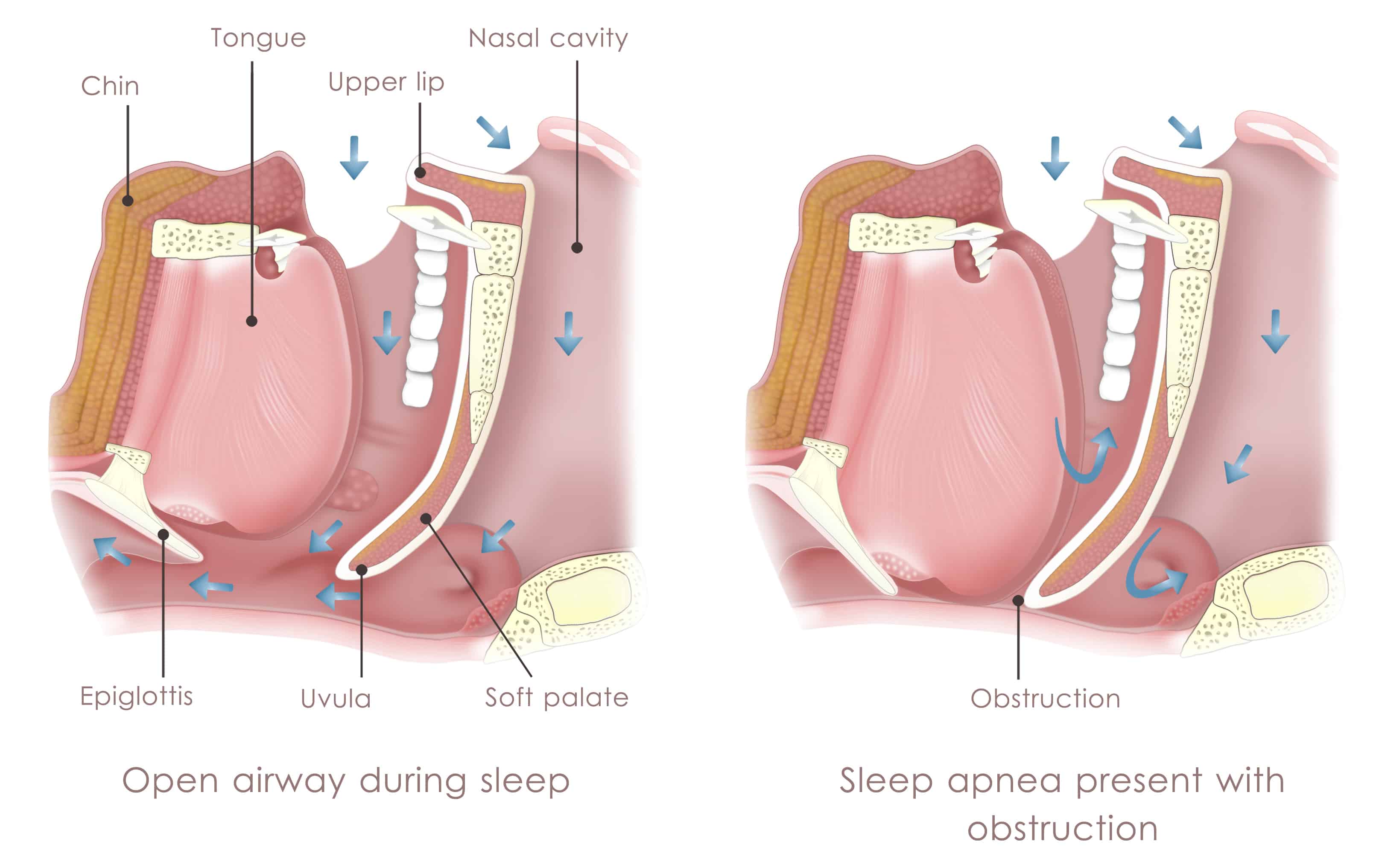
Therefore, it is important to understand the causes so that the problem of snoring can be targeted and resolved. Common causes of snoring include:
Age and Aging
After reaching middle age, muscle mass decreases and collagen is lost, leading to a gradual decline in the muscle tone of the throat (airway) and making the throat increasingly narrow. Although we can't do anything about aging, lifestyle changes and continuous exercise, even training the throat, can help prevent aging in this area.
Anatomical Structure
Men have narrower airways than women, so the likelihood of snoring is higher. A very common physical sign is a small chin (micrognathia). A small chin is caused by the underdevelopment of the lower jawbone. The receding chin leads to insufficient space for the tongue, causing the tongue to narrow the airway in the back of the throat. Enlarged tonsils or adenoids blocking the airway are also common causes of snoring in children.
Nose and Sinuses
Allergic rhinitis and a deviated nasal septum are also common causes.
Smoking, Alcohol, and Medications
Smoking, drinking alcohol, and taking certain medications, such as sedatives like Ativan and Valium, will accelerate the degree of muscle relaxation, leading to drug-induced snoring.
Snoring is an alarm bell for sleep apnea. Snoring is not just a fatigue bombardment for the bed partner; the massive vibrations are enough to damage the carotid arteries and cause hardening.
Obstructive Sleep Apnea
Patients with Obstructive Sleep Apnea experience a cessation of breathing during sleep, and this can happen dozens or even hundreds of times every night.
Every apneic event causes a drop in blood oxygen concentration. Hypoxia triggers a series of emergency life-saving responses in the brain, including the activation of the sympathetic nervous system responsible for the "fight or flight" response, and the release of adrenaline and many cytokines.
The reduction of oxygen in the blood can also damage the heart and potentially trigger heart failure, leading to heart attacks or even sudden death. Moreover, these life-saving responses prevent the body, which is supposed to be asleep, from resting properly. The brain is constantly "aroused," unable to enter deep sleep, resulting in extremely poor sleep quality for the patient.

Because the body is staging this series of abnormal actions every day, combined with the abnormal reactions of many endocrine organs caused by the release of bodily cytokines, the risk of developing diabetes, obesity, hypertension, stroke, heart attacks, and other cardiovascular diseases will significantly increase over the long term.
If you can't imagine how much impact these changes have on the body, try holding your breath for two minutes and see how uncomfortable the physical reaction is, then you will know how terrifying hypoxia is!
A very high percentage of adults who snore already suffer from: Obstructive Sleep Apnea. Abbreviated as: OSA.
Health Hazards Caused by Hypoxia
- Heart Disease
- Stroke
- Headaches
- Hypertension and Metabolic Syndrome
- Sleepiness and Loss of Concentration
- Sudden Death
Heart Disease
The most direct result is a drop in blood oxygen levels. Normal blood oxygen levels should be in the range of 94% to 98%. Snoring for 30 seconds or longer can produce an apnea, and an apnea can cause blood oxygen levels to drop to 80% or lower.
A blood oxygen concentration below 90% is harmful to the body, and the chances of stroke, sudden death, and coronary heart disease will all significantly increase, requiring immediate attention. The associated sleep disorders and apneas are also linked to many cardiovascular diseases, such as hypertension, heart failure, and coronary heart disease.
Research also indicates that people with sleep apnea have double the risk of heart disease compared to ordinary people. Sleep apnea caused by snoring can also lead to cardiac arrhythmias, which over time will trigger many cardiovascular diseases.
Stroke
OSA is a risk factor for stroke. A stroke is a devastating event for any individual and family. A stroke can result in severe disability or death, turning life completely upside down from then on.
Rehabilitation after a stroke is quite difficult, and the recovery of OSA patients after a stroke may be even more delayed. What's worse is that the OSA condition of someone who has had a stroke can become even more severe, turning into a vicious cycle.
Headaches
Morning headaches are a common symptom of sleep apnea. Research has found a high correlation between snoring, sleep disorders, and morning headaches, because the sleep interruption caused by snoring or sleep apnea might be the source of headaches upon waking up in the morning.
Therefore, if you have a problem with waking up with a headache in the morning, you might want to suspect whether you have sleep apnea. Headaches related to sleep apnea usually don't last more than 30 minutes, but people who have become habitual snorers might also experience continuous headaches throughout the day, which usually exacerbates mood-related disorders.
Hypertension and Metabolic Syndrome
Obstructive Sleep Apnea is one of the recognized causes of secondary hypertension. The onset of OSA causes a surge in systolic and diastolic blood pressure, increasing the average blood pressure at night.
Even in many OSA patients, their blood pressure remains elevated during normal daytime breathing. Hypertensive patients suffering from Obstructive Sleep Apnea (OSA) are also a high-risk group for metabolic syndrome.
OSA directly reduces the stimulation of pulmonary stretch receptors, while changes like hypoxemia and hypercapnia enhance various risk factors, including the sympathetic nervous system, the renin-angiotensin-aldosterone system, and inflammation.
Sleepiness and Loss of Concentration
The apneas caused by snoring keep the sympathetic nervous system in an excited state, making it difficult to sleep peacefully, and resulting in fragmented sleep of poor quality. During normal sleep, the human body primarily operates via the parasympathetic nervous system, which works opposite to the sympathetic nervous system and governs the body's repair processes. When the body cannot rest properly at night, the most obvious consequences are daytime sleepiness and inability to concentrate.
This can make people irritable, bad-tempered, and even depressed or melancholic. Additionally, this will directly result in poor efficiency at work or in studies, because the brain cannot get enough deep sleep and reset at night, making it difficult to focus during the day. Many studies show that people who snore have a particularly high rate of accidents, such as car crashes.
Sudden Death
Because OSA is related to many chronic diseases, numerous studies show a link between OSA and increased rates of sudden death. Middle-aged men seem to be the highest risk group, and the cause of death is most often related to cardiovascular disease.
A well-known recent case is American football star Reggie White, who was only 43 years old. A defensive player in the NFL Hall of Fame, he died suddenly of a heart attack in 2004, which is believed to be highly related to his sleep apnea. His widow, Sarah, later co-founded the Reggie White Sleep Disorders Research & Education Foundation with the Sleep Wellness Institute and is dedicated to improving the lives of patients with sleep disorders.

Improve Snoring, Change Your Life
Although snoring is not considered a disease, it can lead to other chronic and cardiovascular diseases. The good news is that it can be controlled or even improved long-term. Preventing snoring requires persistent effort from both yourself and a professional physician, such as starting with weight loss and lifestyle changes.
Snoring is not a one-time symptom but a chronic problem with lifelong impacts. From recognizing that you snore to going to a snoring clinic for evaluation and treatment for snoring, you are taking the first step towards health.
The content is based on the professional experience of physicians. Results may vary depending on individual conditions. Please consult a healthcare professional for personalized medical advice.