Neuroscientific Research Evidence: Children Who Snore Will Develop Cognitive Impairment
Does your little one make snoring sounds like a little pig while sleeping? If so, you need to pay attention, because neuroscientific research has found that children who snore really do become less intelligent!
Does Snoring Affect a Child's Intelligence?
This astonishing conclusion comes from a 2015 meta-analysis containing 16 studies, showing a significant correlation between sleep disorders and poorer academic performance. Researchers found that children with sleep disorders scored 11.8% lower than children without sleep disorders. Among them, scores in art and language were an average of 12.3% lower, math scores were 13.1% lower, and science scores also dropped by 11.6%.
Why does snoring affect a child's intelligence? It turns out that snoring is a manifestation of sleep apnea (especially since children have zero tolerance for hypoxia). This means that children who snore experience periods of not breathing during sleep, leading to brain hypoxia. The developing brain of a child has an extremely high demand for sleep and oxygen. A hypoxic brain is like a mobile phone without a battery; it cannot function normally, affecting cognitive functions such as memory, attention, and judgment. Over the long term, this will cause children to experience difficulties and fall behind in learning.
In addition to becoming less intelligent, snoring can cause other harms to a child's health. The Taiwan Neurological Society points out that snoring is also related to a child's tonsils and adenoids; if not properly treated, it may develop into a chronic disease. Furthermore, if a person is in a state of poor sleep for a long time, they are prone to emotional instability and decreased immunity, and it will also increase the risk of cardiovascular diseases, stroke, etc.
According to MRI research on cranial nerves by the University of Maryland, children who snore develop severe problems in brain development. The gray matter is thinner in several areas of the frontal lobe. It is worth noting that the reduction in gray matter is associated with behavioral problems in children with sleep apnea, including hyperactivity, increased aggression, and inattention.
Professor Amal Isaiah of the Department of Otorhinolaryngology at the University of Maryland School of Medicine offers this advice to parents: "If your child snores more than twice a week, then this child needs a sleep evaluation. We now have strong structural evidence from brain imaging to highlight the importance of diagnosing and treating pediatric sleep-disordered breathing." So, if you notice signs of snoring or other sleep disorders in your little one, such as sleeping with their mouth open, never think it is cute or harmless; hurry and take them to see a doctor! Otherwise, you will regret it when they grow up!
Snoring Interferes With the Brain's Repair Process at Night
Did you know that snoring interferes with the repair process of our brains? What is the reason behind this?
The daytime is working time for our brains. Regulated by the Blood-Brain Barrier (BBB), it protects our brains from bacterial infections. The metabolites and toxins produced by the blood-brain barrier during the day are completely cleared away by a cleansing process in the brain at night. During sleep, the relaxation of nerve cells increases the flow of cerebrospinal fluid (CSF) in the brain, washing away cell buildup that cannot escape while awake. This is a self-cleaning method (like washing dishes) that only happens during sleep.
However, studies have found that snoring and sleep apnea disrupt the regulation of the Blood-Brain Barrier (BBB). This means the normal cleaning process cannot function properly, which further leads to brain inflammation and damage. Additionally, airway obstruction due to sleep apnea causes brain hypoxia, leading to a reduction in the amount of oxygen reaching the brain, resulting in brain cell damage and cognitive decline. Furthermore, the reduction in oxygen leads to the formation of free radicals, further damaging brain cells. Moreover, over time, axons (the connecting cells in the brain) begin to degenerate, preventing information from being sent quickly across the brain.
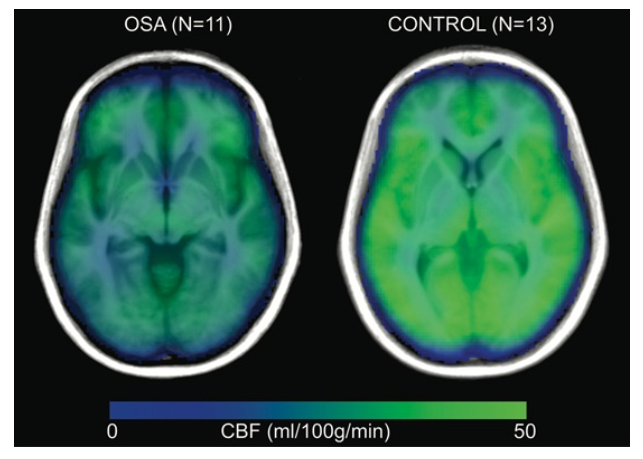
From this image, it can be observed that in patients with Obstructive Sleep Apnea (OSA), the flow of CSF in the brain (mostly deep green to dark blue areas) is significantly less than the CSF flow in the brains of normal patients (mostly fluorescent green areas).
Affected Brain Regions and Impaired Functions
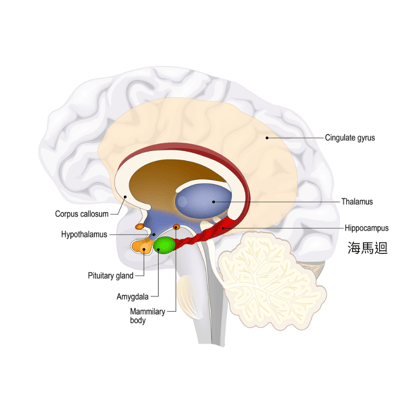
When the airway is obstructed during sleep, hypoxia occurs, leading to a reduction in the amount of oxygen reaching the brain. This can lead to brain cell damage and cognitive decline. In addition, the reduction in oxygen leads to the formation of free radicals, further damaging brain cells. Research indicates that hypoxia damages the hippocampus, the part of the brain responsible for memory and learning. This can lead to cognitive decline, such as memory loss and decision-making difficulties.
Frontal Lobe - Governs Reasoning Ability and Impulse Control
The frontal lobe of the brain is located in the front part of our brains. This area is responsible for our language expression, self-awareness, and voluntary muscle control; in other words, these areas are responsible for higher reasoning abilities and impulse control. However, what is worrying is that for children who snore long-term and have sleep apnea, the gray matter in their frontal lobes is relatively thinner! Gray matter is the part of the central nervous system where a large number of neuronal cell bodies are concentrated, responsible for various sensory, motor, or intermediate information processing. Studies point out that thinner gray matter in these areas leads to a series of problems, including inattention, learning disabilities, and impulsive behavior, which is very serious! Therefore, long-term snoring and sleep apnea are problems that cannot be ignored!
Hippocampus - Controls Short-Term and Long-Term Memory
Through brain CT scans, it can be observed that in patients with sleep apnea, the size of their hippocampus is smaller than that of ordinary people. Because the hippocampus controls short-term and long-term memory, this causes them to experience progressive brain fog and memory loss! Additionally, in Alzheimer's disease patients, the hippocampus is also the first area to be damaged. Compared to the correlation between sleep apnea and the hippocampus, the connection between Alzheimer's disease and the hippocampus is already widely known.
Other Vital Brain Centers - Blood Pressure and Heart Rate
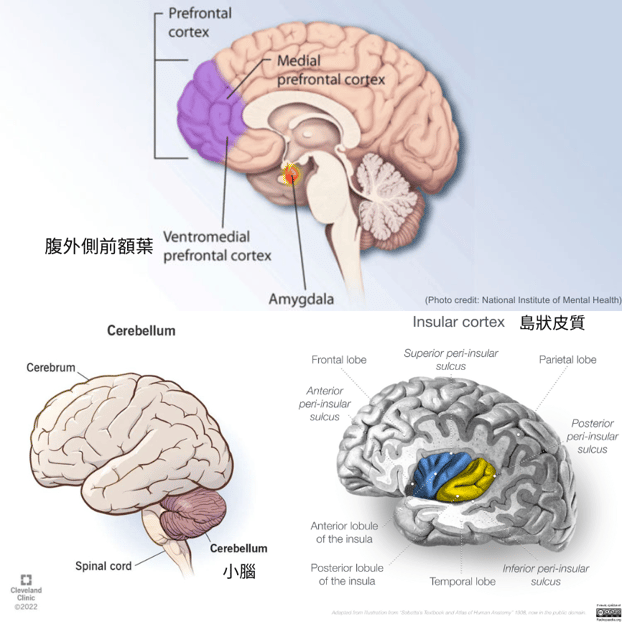
Brain areas that control blood pressure and heart rate can also be damaged during apneas. These centers for blood pressure changes and autonomic heart rate responses include the following:
- Ventrolateral prefrontal cortex
- Right insular cortex
- The cerebellum
The link between snoring, sleep apnea, and heart disease has been confirmed by research. Although sleep apnea may have a direct effect on the heart, increasing the risk of cardiovascular disease and stroke, the damage to the brain mainly occurs in patients who already suffer from heart disease.
Brain hypoxia and damage caused by long-term snoring and sleep apnea are progressive. As sleep-disordered breathing worsens, the body enters a cycle of brain and heart dysfunction, which can ultimately lead to severe conditions, such as resistant hypertension, congestive heart failure, memory loss, Alzheimer's disease, dementia, and so on.
It is crucial to find out the cause of snoring or mouth breathing during sleep. To find out if you have sleep apnea, you can seek help from a dentist or a relevant sleep specialist.
Symptoms of Sleep Apnea and Cognitive Impairment
The symptoms of sleep apnea may vary depending on the severity of the condition. Common symptoms include:
- Loud snoring
- Gasping or choking during sleep
- Frequent nighttime awakenings and feeling tired or groggy during the day
- Cognitive impairment can also lead to various symptoms, such as memory loss, confusion, and difficulty making decisions
- Greater mood swings, prone to depression and anxiety
- Other symptoms may include headaches, dry mouth, and lack of concentration
It is worth noting that not everyone with sleep apnea experiences all of these symptoms. In most cases, many people do not even realize they have the condition because their breathing interruptions may not be severe enough to wake them from sleep.
Dental Problems Are Also Closely Related to Sleep Apnea
Many people may be confused about why seeking a dentist's help might provide relief for sleep apnea.
Sleep apnea usually occurs due to airway obstruction. Airway obstruction can be due to nasal allergies caused by Taiwan's humid climate, or structural nasal problems caused by a deviated nasal septum. It can also be indirectly caused by dental problems such as malocclusion or a small chin (micrognathia) narrowing the airway.
Clinically, some children may have a combination of problems, such as nasal allergies along with malocclusion. For these children, in addition to using steroid nasal sprays prescribed by an ENT doctor, they must also remember to seek a dentist's help to treat dental problems! To help children keep their airways open during sleep, dentists usually recommend that children wear a mandibular advancement device.
Diagnosis and Treatment Options for Sleep Apnea
If you suspect your child has sleep-disordered breathing, to prevent cognitive decline, weakened memory, inattention, etc., it is crucial to seek a doctor's help in a timely manner. The doctor will diagnose your child to confirm if they have a sleep apnea problem.
Treatment options for sleep apnea vary according to the severity of the condition.
Patients with a mild condition can be treated through lifestyle changes, such as weight loss, regular exercise, avoiding alcohol and sedatives, and developing good sleep hygiene habits. For example, adhering to a regular sleep schedule and creating a relaxing sleep environment can also help improve sleep quality.
For patients with a moderate condition, or those with malocclusion or a small chin, doctors will recommend wearing dental devices like an "[Anti-Snoring Oral Appliance]" or Mandibular Advancement Device to help keep the airway open.
For more severe patients, doctors may recommend a Continuous Positive Airway Pressure (CPAP) machine. This machine delivers air pressure through a mask worn over the nose or mouth to keep the airway open during sleep. However, regarding cognitive impairment, it is necessary to seek treatment from a professional doctor and engage in exercises and activities that enhance cognitive abilities.
Conclusion
Sleep apnea is a common condition but also a problem that many people overlook for a long time. However, sleep apnea can be called a silent killer. It leads to many health problems, including cognitive impairment, memory decline, and an increased risk of cardiovascular disease. Understanding the relationship between sleep apnea and cognitive impairment is crucial for managing the condition and preventing further brain damage.
If you suspect your child has sleep apnea or problems resembling cognitive impairment, please seek professional help as early as possible. With correct diagnosis and treatment, you can improve your child's quality of life and protect them from cognitive impairment or becoming less intelligent, allowing them to grow up smart and healthy.
References:
- Barbara Galland, Karen Spruyt, Patrick Dawes, Philippa S. McDowall, Dawn Elder, Elizabeth Schaughency; Sleep Disordered Breathing and Academic Performance: A Meta-analysis. Pediatrics October 2015; 136 (4): e934–e946. 10.1542/peds.2015-1677
- https://www.drstevenlin.com/sleep-apnea-symptoms-brain-damage/
- https://neurosciencenews.com/snoring-behavior-children-18224/
- https://radiopaedia.org/articles/insular-cortex
- https://www.psypost.org/2021/09/study-suggests-that-prefrontal-cortex-damage-can-have-a-paradoxical-effect-on-rationality-61827
- https://my.clevelandclinic.org/health/body/23418-cerebellum
The content is based on the professional experience of physicians. Results may vary depending on individual conditions. Please consult a healthcare professional for personalized medical advice.