11 Consequences Doctors Haven't Told You
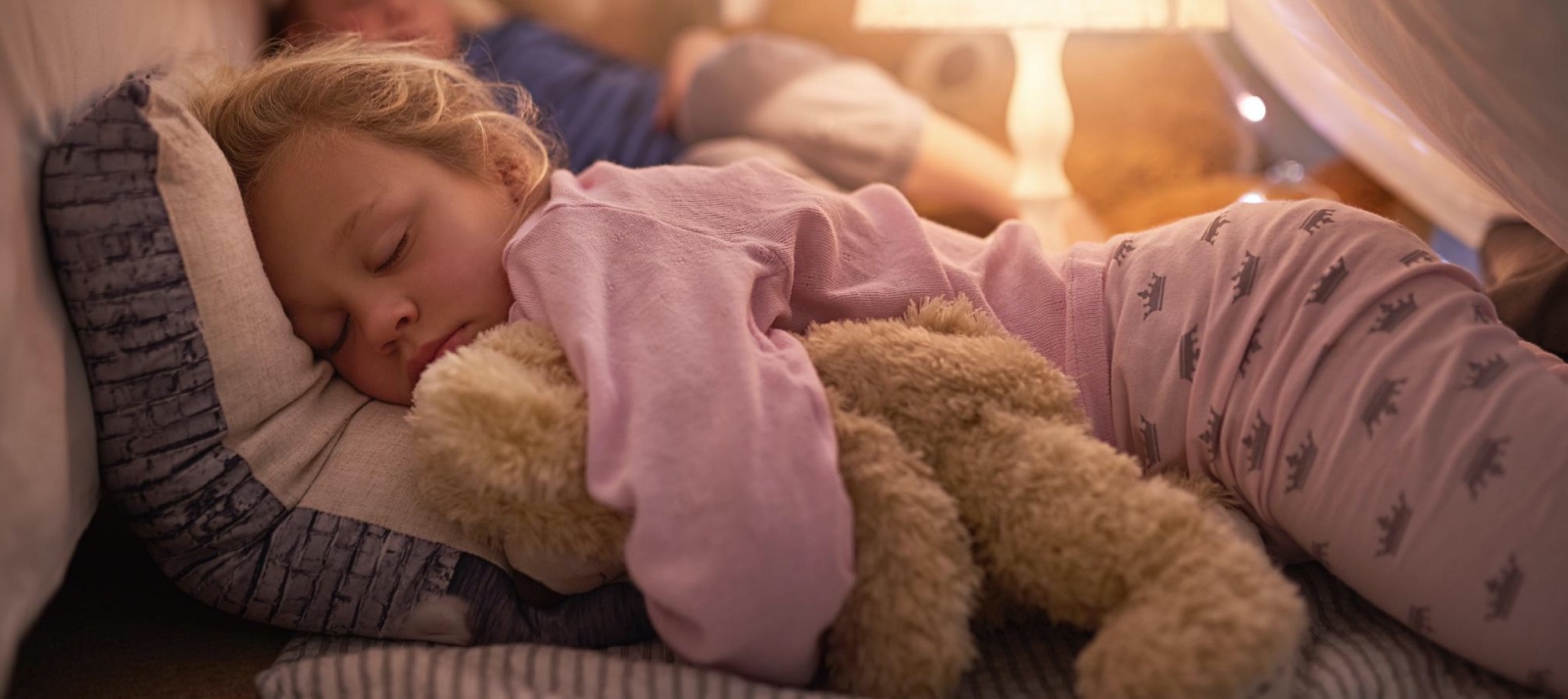
Are a child's hyperactivity, short stature, emotional instability, developmental delay, and crooked teeth all related to sleep apnea? "Snoring" during sleep is the key important signal!
Is "Snoring" an Important Warning Sign of Pediatric Sleep Apnea?
Many people think that children snoring in their sleep just means they are sleeping soundly. However, the sound of snoring actually represents an alarm bell that airway obstruction is occurring. The reason children make snoring sounds during sleep is because a potentially problematic airway (narrow anatomical structure or oral muscle weakness) causes the air passing through to make a snoring sound—this is very similar to whistling, where air passing through a narrow airway makes a sound.
Understanding Sleep Apnea in Children and Adolescents
"Sleep Apnea" refers to the upper airway becoming obstructed during sleep, causing breathing difficulties, which is called Hypopnea; in severe cases, the airway can be completely blocked, making it impossible to breathe, which is called Apnea.
When the airway becomes obstructed during sleep and air cannot be inhaled, the brain becomes very nervous. It activates the autonomic nervous system's fight-or-flight response, including an accelerated heart rate, elevated blood pressure, and rapid breathing; it also tries to wake the child up so that airway muscle tone can be restored to prevent suffocation. Growing children and adolescents have a very high demand for sleep and oxygen, requiring adequate oxygen and an uninterrupted sleep cycle every time they sleep.
According to the standards of the International Sleep Medicine Society, a diagnosis of pediatric sleep apnea can be made if a child experiences hypopnea or apnea more than once per hour during sleep (AHI > 1). Therefore, the impact of sleep apnea on children is much more severe than on adults. Pediatric sleep apnea is a serious problem that requires timely diagnosis and treatment to avoid long-term complications and consequences.
Sleep Cycles of Children and Adolescents
The younger the child, the longer the sleep time they need. Even adolescents should need 8-9 hours of adequate and uninterrupted sleep every day. A complete sleep cycle consists of four stages: light sleep, deep sleep (NREM), Rapid Eye Movement (REM) sleep, and wakefulness.
Each sleep cycle lasts about 90 minutes and repeats four to six times a night. Sleep apnea interrupts the sleep cycle, preventing children or adolescents from entering deep sleep and rapid eye movement sleep. These two sleep stages are very important for the physical and mental development of children and adolescents because they are crucial stages for the brain's nerves to shape memory, emotion, IQ, and learn new things.
Therefore, sleep apnea directly affects the mind, learning, memory, emotion, and immune system of children and adolescents, and the immediate effects can be seen with just one night of interference.
The Broad and Profound Impact of Sleep Apnea on Children and Adolescents
Short Stature
The growth hormone needed by children during their growth stage is secreted most vigorously during deep sleep at night. Inefficient sleep leads to insufficient secretion of growth hormone, so the child will be shorter than their classmates.
Developmental Delay
A lack of growth hormone not only causes physical developmental delay but may also cause deficits in the child's executive function and even create some brain problems.
Hyperactivity and Inattention
According to research, a high proportion of children and adolescents with "Attention Deficit Hyperactivity Disorder (ADHD/ADD)" also have sleep apnea. How many cases of pediatric or adolescent sleep apnea are misdiagnosed as ADHD? Studies show it could be as high as 30% to 40%. Due to the long-term lack of real-time sleep testing tools in the past, this number might be severely underestimated.
Daytime Sleepiness, Low Learning Efficiency
Many children experience inattention or dozing off in class during the day. Teachers or parents often attribute the cause to "not liking to study" or "not being serious." In fact, children with sleep apnea often exhibit a lack of concentration at school due to inadequate sleep, and academically, they may fall behind.
Poor Emotional Control
If the body does not get enough sleep, mental health will also be affected. When a child is constantly in a low mood or even irritable for a long time, it is highly likely that there is a strong connection to their sleep quality.
Nocturia
Nocturia refers to the involuntary urination during sleep after the age when urination can be controlled. There can be many reasons for nocturia, such as a small bladder capacity, delayed neurological development, abnormal hormone secretion, stress or anxiety, constipation, urinary tract infection, diabetes, etc. However, sleep apnea is also a significant factor because it affects nighttime urine production and excretion through the following mechanisms:
- Sleep apnea causes blood oxygen levels to drop and blood pressure to rise, stimulating the heart to secrete "atrial natriuretic peptide," a hormone that promotes diuresis, reduces the kidney's reabsorption of water, and increases nighttime urine volume.
- Sleep apnea keeps the child in a light sleep state, unable to enter deep sleep. During deep sleep, the brain secretes "antidiuretic hormone," a hormone that inhibits diuresis and reduces nighttime urine volume. If there is a lack of deep sleep, the secretion of antidiuretic hormone will decrease, and nighttime urine volume will increase.
- Sleep apnea causes the child to breathe laboriously during sleep, generating abdominal pressure that pushes urine from the bladder to the urethra. Due to the lack of deep sleep, the child's arousal threshold is also lowered, meaning they do not wake up easily when they feel the urge to urinate.
All of these factors increase the likelihood of involuntary nighttime urination.
Nighttime Sleepwalking, Sleep Talking, Nightmares
Some studies show that these sleep behaviors may be a manifestation of pediatric sleep apnea, suspected to be triggered by the sleep disturbance caused by sleep apnea.
Abnormalities in the Cardiovascular System, such as Hypertension, Arrhythmia, Myocardial Injury, etc.
Sleep apnea leads to breathing pauses and a decrease in blood oxygen levels. This hypoxic state can cause blood pressure to rise and the heart rate to become irregular, thereby increasing the risk of cardiovascular disease.
Endocrine System Disorders
Hypoxemia stimulates the sympathetic nervous system, increasing the secretion of stress hormones, thereby disrupting the endocrine balance, such as:
- Reduced secretion of growth hormone, leading to growth retardation or short stature.
- Hypothyroidism, leading to slowed metabolism, weight gain, and developmental delay.
- Increased secretion of glucocorticoids, leading to decreased immunity, susceptibility to infection, weight gain, and elevated blood sugar.
- Dysregulation of sex hormone secretion, leading to precocious puberty or delayed sexual development.
What Are the Factors Causing Airway Narrowing in Children or Adolescents?
According to the book "Jaws: The Story of a Hidden Epidemic", authored by Harvard anthropologist Paul R. Ehrlich and orthodontist Sandra Kahn after years of research, problems such as airway narrowing and poor dentofacial development have less to do with genetics and more to do with various consequences of an industrialized society:
Weakening of Oral Muscle Function
After the Industrial Revolution, the human diet has become increasingly refined, making modern people need to chew less and less; a lack of breastfeeding also causes babies' oral muscles to weaken from birth. Weakened oral muscles lead to poor development of the upper and lower jaws, causing insufficient space for teeth and resulting in crowding. Modern people's wisdom teeth almost never have enough space to erupt as they did for our ancestors four hundred years ago. This indicates that the modern human oral cavity space has shrunk, leading to insufficient space for the tongue as well, forcing it to press backward against the airway, causing airway narrowing.
Industrialized Foods Lack Real Nutrition
Today's children often eat out, resulting in a high-sugar diet, and the proportion of overweight or obese children is extremely high. Obesity causes fat accumulation in the neck and tongue, compressing the airway and causing airway narrowing.
Air Pollution Leads to Mouth Breathing
Air pollution leads to nasal allergies, nasal congestion, and mouth breathing. Depending on the child's age, these problems may respectively cause:
- Children aged 2-5: Enlarged tonsils and adenoids
Due to nasal congestion forcing them to mouth breathe, the nose loses its original function of filtering germs and heating and humidifying the air, making children more prone to getting sick. As air passes in and out of the mouth, the tonsils and adenoids at the back of the oral cavity become the first line of defense against germs. They are prone to swelling due to repeated allergies and inflammation. For example, children who frequently catch colds or have allergies often have enlarged tonsils or adenoids. The enlarged glands can directly block the airway, so many children with long-term allergies often have the problem of sleep apnea.
- Children aged 6-10: Poor development of the upper jaw (Gothic arch and pseudoprognathism)
If children between the ages of 6 and 10 frequently experience nasal allergies leading to nasal congestion, it will cause poor development of the upper jaw and nasal airway. When the nose is congested and they breathe through the mouth, the tongue must drop to the floor of the mouth to open the oral cavity so air can pass (this is a very abnormal situation). Because the tongue is not resting against the upper palate, the child's upper jaw lacks the force of the tongue during development, making the upper jaw narrow and highly arched (called a Gothic arch). The narrowed upper jawbone then makes the nasal cavity upstairs and the oral cavity downstairs even smaller, which in turn leads to a narrower airway, creating a vicious cycle.
- Adolescents aged 12-15: Poor development of the lower jaw (Micrognathia)
Adolescents between the ages of 12 and 15 are right in the stage of lower jawbone development. If adolescents at this age also breathe through their mouths due to nasal congestion or lack strong muscle stimulation during lower jaw development, the lower jaw will develop poorly and become a small chin (retrognathic mandible). A small chin is very common, and many parents or dentists mistakenly believe the child has a prominent upper jaw (actually, the upper jaw looks prominent because the lower jaw is too recessed). The renowned American orthodontics professor McNamara found in a series of studies that modern children almost never have an excessively prominent upper jawbone; almost all of them have an excessively recessed lower jaw.
If the problem of a small chin is not resolved during this period, after the age of 18, it can only be solved through orthognathic surgery combined with orthodontics.
How is Pediatric Sleep Apnea Treated?
Because children still have growth potential, structural problems in the nasal cavity, oral cavity, and airway should be actively treated. The child's own growth potential can be utilized to correct poor anatomical structures. ENT doctors and orthodontists play extremely crucial roles here.
Dr. Breath's Airway-Centric Personalized Medicine and Interceptive Orthodontic Strategy
Because the causes of sleep apnea in children differ, the most ideal treatment method should adopt an "Airway-Centric personalized medicine and interceptive orthodontic strategy": comprehensively considering the child's age and developmental stage, the location of anatomical developmental defects (potential genetic, craniofacial, and oral muscle issues), clinical symptoms, the presence of comorbidities, risk factors (such as obesity or poor lifestyle habits), and sleep test results.
Personalized Medical Strategies for Sleep Apnea in Children and Adolescents May Include:
Personalized Medical Strategies for Sleep Apnea in Children and Adolescents
1. Corticosteroid Nasal Sprays
For children with mild to moderate obstructive sleep apnea and nasal congestion caused by enlarged adenoids/allergic rhinitis, treatment with intranasal corticosteroids or leukotriene modifiers for 2 to 4 weeks may be trialed as an adjunct or alternative to adenotonsillectomy or positive airway pressure before determining whether treatment should continue. Because these steroid nasal sprays do not have the dosage and action pathway of oral steroids, parents do not need to worry about side effects and can use them long-term. (Systemic corticosteroids are ineffective for these children.)
2. Adenotonsillectomy
For children with enlarged adenoids or tonsils, an evaluation for adenotonsillectomy needs to be performed by an ENT doctor with training in pediatric sleep apnea.
- Children with adenotonsillar hypertrophy and severe OSA (Apnea-Hypopnea Index AHI >10) who are otherwise healthy. (Surgical improvement in obese children may be poor, and weight loss needs to be considered simultaneously, so a positive pressure ventilator can be worn during the weight loss transition period.)
- For children with moderate OSA (AHI 5-10), both resection or starting with supportive therapy for six months are reasonable approaches; the decision usually depends on symptoms and the parents. Supportive care includes: treating asthma and allergic rhinitis, sleep hygiene education, and treating the nose with nasal saline and sprays. The child should be clinically re-evaluated within six months, or earlier if symptoms worsen.
Children who have undergone an adenotonsillectomy may gradually experience a recurrence of OSA several years later. The reason is mostly related to weight gain, persistent allergies causing the adenoids and tonsils to swell again, or changes in body shape during puberty. Oral myofunctional therapy and interceptive orthodontics can help subsequently improve and establish healthy airway development.
3. Transitional Positive Airway Pressure (Transitional CPAP)
For children without enlarged adenotonsillar tissue or those who wish to avoid surgery, positive airway pressure therapy is an alternative to adenotonsillectomy. It may also be suitable for children who have had an adenotonsillectomy but with poor results. Positive airway pressure can include Continuous Positive Airway Pressure (CPAP) or Bilevel Positive Airway Pressure (BPAP) ventilators.
4. Oral Myofunctional Therapy
Oral myofunctional therapy can exercise the weakened oral and facial muscles of children, such as incorrect tongue posture and perioral muscle weakness caused by mouth breathing, to enhance the strength and coordination of these muscles, promoting normal development of the upper and lower jaws, improving airway structure, and reducing the occurrence of sleep apnea.
5. Airway-Centric Interceptive Orthodontic Combination Therapy
Unlike traditional orthodontics, which only aims to align teeth, growing children have tremendous growth potential. Orthodontic treatment of the jawbones and teeth can be performed early to achieve the triple goal of establishing healthy dentition, a good facial profile, and a sound airway simultaneously. This requires the child to undergo "interceptive orthodontics" (growth-modifying orthodontics) in stages at different developmental phases. The purpose is to stimulate the jawbone through growth to expand the underdeveloped nasal airway, jaw, and oral volume, and to establish good upper airway, oral, and dentition functions. There is a golden time for "interceptive orthodontics," generally recommended to begin between the ages of 6-10, because the child's jawbone begins to set after puberty.
Interceptive orthodontics may include:
- Rapid Maxillary Expansion (RME) – Prepubescent children (ages 6-10) with OSA, narrow upper jaw underdevelopment, but without or having already had enlarged adenoids and tonsils removed, are excellent candidates for RME as a combination therapy. RME is a functional orthodontic treatment that expands the upper jaw and nasal passages, thereby increasing airway patency. Many studies have confirmed that in non-obese children, rapid maxillary expansion orthodontics has very good results in treating OSA: after four months, the average AHI decreased from 12 times per hour to less than 1 time, almost returning to the condition of a normal child. Another study found that after the effects of this combination therapy, 94% of children had their OSA resolved.
- Mandibular Advancement Device (MA) – A mandibular advancement device is also an oral functional orthodontic appliance, suitable for adolescents between the ages of 12-15 whose chins are still underdeveloped to start chin growth. It can improve a small chin and increase airway space by stimulating the growth of the lower jawbone.
In many areas, finding a dentist highly experienced in pediatric sleep breathing can be a limiting reality. Parents of children or adolescents with sleep apnea are advised to seek an orthodontist with such experience for interceptive orthodontics to avoid delaying the golden treatment window.
6. Other Therapies
Obese or overweight children with OSA may need to reduce the severity of their sleep apnea through weight loss, especially for obese children with severe OSA; furthermore, regardless of whether they have OSA, children should avoid irritants in their environment as much as possible, such as allergens (commonly dust mites, animal dander, and stuffed toys) and secondhand smoke.
Sleep apnea is a frequently overlooked disease. The biggest reason is not that it isn't dangerous, but because it is not diagnosed. Early understanding of sleep apnea, finding a professional doctor for diagnosis, and undergoing suitable treatment can not only allow the child to have sounder physical and mental development during the golden period of growth but also save the child from suffering from being ostracized and labeled during the learning process. If you are unsure whether your child has sleep breathing problems, you can gain a preliminary understanding through the "Pediatric and Adolescent Sleep Breathing Assessment Scale" we provide.
The content is based on the professional experience of physicians. Results may vary depending on individual conditions. Please consult a healthcare professional for personalized medical advice.