The Trouble with Sleep Bruxism! Square Face, Sleep Apnea, TMJ, Enamel Wear—All From It
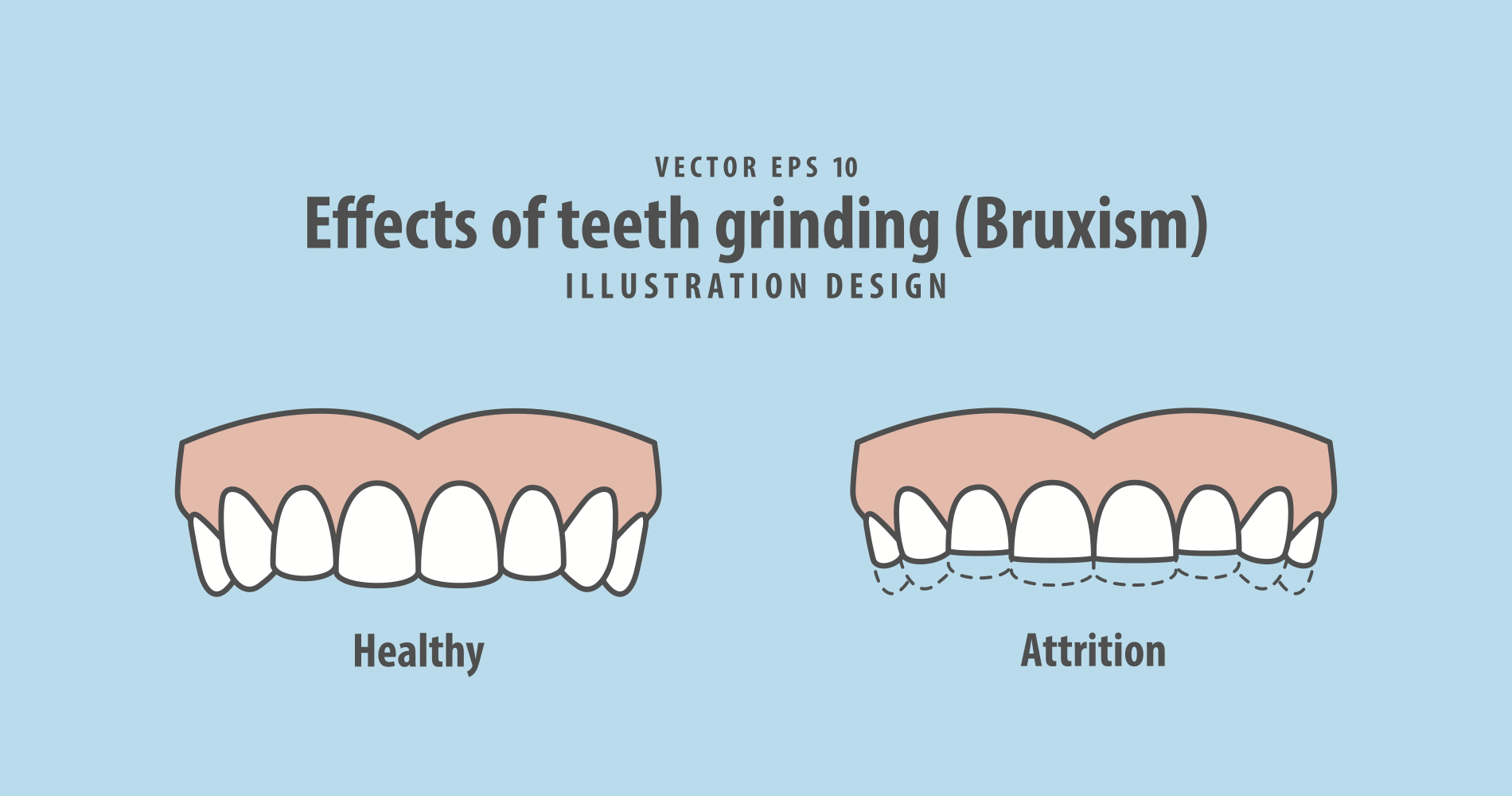
The Trouble with Sleep Bruxism
Have you ever been awakened in the middle of the night by a grinding sound made by your bed partner? Or sometimes you wake up in the morning feeling a headache, sore cheek muscles, and temporomandibular joint (TMJ) pain? It turns out these are all caused by bruxism!
Bruxism is a common problem for modern people, whether they are students, office workers, or the elderly, and the incidence rate does not discriminate by gender.
Research shows that 8% to 31% of people suffer from sleep bruxism, and many of them are unaware that they have a teeth-grinding problem! Next, let's learn more about what "bruxism" is all about!
Types of Bruxism
Bruxism is caused by abnormal movements of the jaw and facial muscles. Bruxism has two different manifestations: Clenching while awake (tightly clenching the upper and lower teeth together) and Grinding during sleep (rubbing the upper and lower teeth against each other). The two actions are different, and so are the causes.
Therefore, bruxism is actually divided into two types: Awake Bruxism and Sleep Bruxism.
Awake Bruxism
As the name implies, it occurs while awake, and the causes are mainly related to emotional and psychological stress. When patients experience stress or tension, they unconsciously clench their teeth. The treatment for these patients is mainly behavioral modification. First, the patient is made aware of this bad habit of clenching their teeth, and then they work to further avoid it.
Sleep Bruxism
Defined by the "International Classification of Sleep Disorders" as the involuntary teeth-grinding behavior that occurs during sleep, it is a type of sleep disorder.
It is considered to be caused by a combination of multiple factors and may also occur simultaneously with many other sleep disorders, such as insomnia, sleep-related epilepsy, sleep apnea, Rapid Eye Movement (REM) Sleep Behavior Disorder (RBD), and Sleep-Disordered Breathing (SDB).
Sleep arousals, such as sleep apnea, are considered to be a possible cause of sleep bruxism.
Why Do We Grind Our Teeth?
Bruxism is a condition caused by multiple factors. The following are all potential causes of bruxism:
- Psychological stress: More related to awake clenching.
- Abnormal excitation of the central nervous system: More related to sleep bruxism.
- Genetics.
- Trauma and disease.
- Alcohol, smoking, and caffeine.
- Malocclusion/Occlusal interference.
- Facial structure (e.g., small chin).
- Sleep disorders and arousals (e.g., sleep apnea).
What Are the Symptoms and Consequences of Bruxism?
Bruxism has many symptoms and varies from person to person. Some people may only have enamel wear, while others may experience multiple symptoms simultaneously. The following lists some of the most common symptoms for everyone.
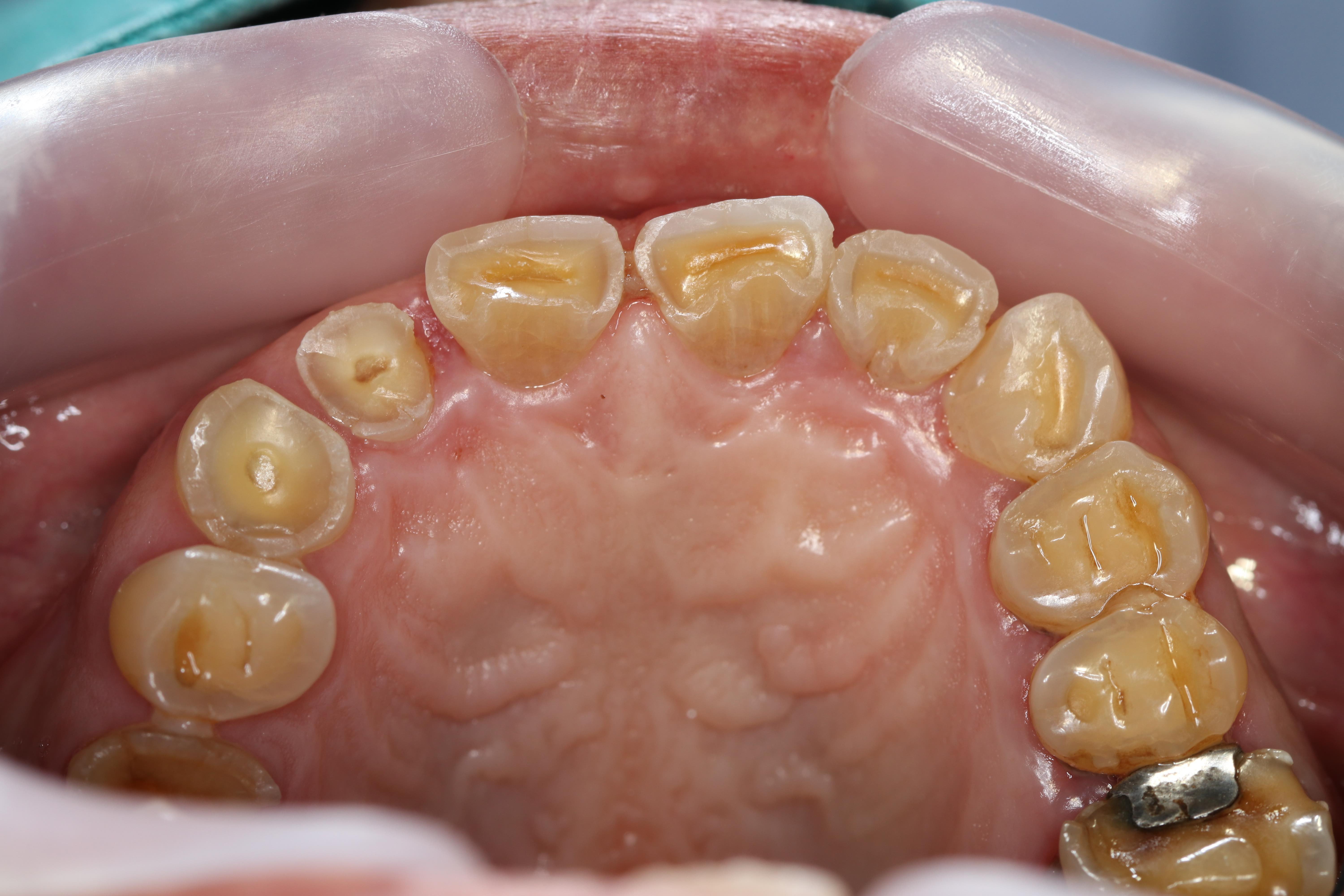
Image: Severe enamel wear of all teeth caused by sleep bruxism.
- Enamel wear
- Tooth fractures (natural teeth, restorations, dental implants, and dental crowns can all crack and be damaged)
- Tooth movement or loosening
- Pulpal necrosis (due to long-term stimulation)
- Headaches, shoulder and neck soreness, backache
- Masseter muscle hypertrophy (square face)
- TMJ pain
- Gastroesophageal reflux
- Sleep apnea
Can Bruxism Lead to Headaches and a Square Face?
The muscles of the human head and neck are closely related to the chewing motion of the teeth. In order to maintain the daily operation and balance of the oral cavity, the muscles of the head and neck help and cooperate with each other. Therefore, when you grind or clench your teeth, other head and neck muscles besides the chewing muscles also contract and are affected in order to maintain the stability of the head!
If the teeth grinding is very severe, the large temporalis muscles located near the left and right temples will become fatigued and sore, presenting symptoms of headaches and Temporomandibular Joint Disorder (TMD); long-term teeth grinding will also make the masseter muscles on both sides of the cheeks strong and hypertrophic, resulting in a square-face appearance. (Reference: How to Save a Square Face?)
Diagnosis of Sleep Bruxism
The main cause of sleep bruxism is still unclear. In the early days, it was thought to be caused by occlusal disharmony, but this argument has been proven wrong.
In addition to occlusion, emotion and stress were once considered to be main causes, but this correlation only exists in a small portion of people, so it is also not recognized. Therefore, nowadays, the diagnosis of bruxism is increasingly leaning toward the need for sleep breathing tests to rule out "Obstructive Sleep Apnea (OSA)".
In recent years, studies have found that up to 86% of bruxism patients also suffer from sleep disorders.
Does Bruxism Need to be Treated?
The masseter muscle is one of the strongest muscles in the human body, and an ordinary person's bite force can reach 80 kilograms.
Imagine your masseter muscles forcefully contracting non-stop every night, continuously applying force to our teeth, joints, and tissues. Over time, in addition to the teeth being damaged by excessive friction, the tissues, mucosa, muscles, temporomandibular joint, etc., around the teeth may also be injured as a result.
Therefore, once bruxism is suspected, early diagnosis, early detection, and early treatment are very important!
How is Sleep Bruxism Treated?
Currently, the treatment of bruxism mainly involves wearing an occlusal splint (bite guard). Although it cannot cure bruxism at its root, it has the following functions:
- Reduces tooth wear and fracture
- Reduces tooth movement
- Alleviates muscle pain
- Avoids injury to the dental pulp and periodontal tissues
- Reduces the sound of teeth grinding
Common Styles of Occlusal Splints Used for Bruxism
(1) Conventional type (Michigan splint)
(2) Soft type (Soft)
(3) Mandibular Advancement Device (MAD), also known as an "anti-snoring oral appliance"
However, not all styles yield good wearing results. Clinical studies show that for some patients who wear conventional or soft occlusal splints, the bruxism not only fails to improve after wearing them but even tends to worsen; whereas the mandibular advancement device (anti-snoring oral appliance) has been proven to have better results. Therefore, for those who have sleep bruxism and also have sleep apnea, an anti-snoring oral appliance is a more suitable option.
Do you now have a further understanding of bruxism? Although bruxism does not show severe consequences in the short term, if it is not prevented early, over time, it will cause irreversible damage to the enamel, temporomandibular joint, muscles, and more.
Therefore, if you find that you have the above symptoms or have any concerns, you must not ignore them. The right solution is to seek a professional doctor for consultation and evaluation as soon as possible!
The content is based on the professional experience of physicians. Results may vary depending on individual conditions. Please consult a healthcare professional for personalized medical advice.